The Babadook (2014)
An exploration of Jennifer Kent's film The Babadook through the lens of Jungian psychology and alchemical symbolism.
- 6 min read
Feeding the Babadook: A Jungian and Alchemical Reading of Shadow, Grief, and Integration
Jennifer Kent’s The Babadook is more than a horror film. It is a mythic, psychological allegory for grief and trauma, for the lifelong process of integrating the Shadow. Beneath its unsettling surface lies a deeply compassionate and transformative journey, one that resonates with Jungian inner work and the symbolic process of alchemy.
The Babadook as the Jungian Shadow
In Jungian terms, the Shadow represents the unconscious aspects of the psyche that the ego refuses to acknowledge: rage, grief, guilt, fear, desire. These repressed parts, when denied, gain strength and autonomy. The Babadook gives terrifying form to this reality.
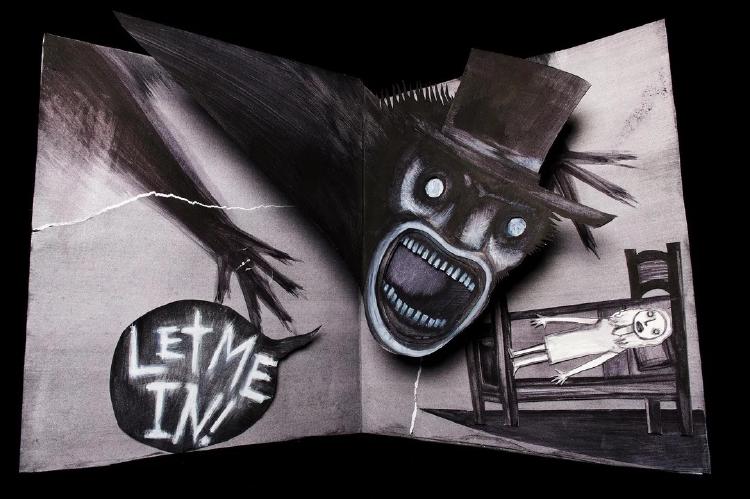
The children’s book that mysteriously appears states plainly:
The more you deny, the stronger I get.
Amelia keeps avoiding her trauma: the grief of losing her husband, the exhaustion of single motherhood, the resentment toward her child. As she does, the Babadook grows stronger. Eventually, it overwhelms her entirely, resulting in full possession by the Shadow.
Descent Into the Underworld: The Basement
Amelia’s journey into the basement, where she sees a vision of her deceased husband, is a descent into the unconscious. At first, the Babadook wears the comforting illusion of Oscar, evoking grief and longing. She embraces and kisses him in a moment full of yearning and pain.
But this is not Oscar. It is the Shadow in disguise, seducing her with the illusion of comfort. Jung warned that the Shadow does not only appear as terror. It can be enticing and beguiling, especially when it mimics what the ego most desires.
Only when “Oscar” demands she sacrifice her son does the illusion shatter. What follows is an eruption of sacred fury rather than a retreat:
If you touch my son again, I’ll fucking kill you.
This is Amelia’s moment of psychic sovereignty. She breaks from illusion and reclaims her will, beginning the process of individuation.
Samuel: The Divine and Alchemical Child
Samuel, Amelia’s son, may appear chaotic and disruptive on the surface, but symbolically, he is the film’s beating heart. In Jungian terms, he is the Divine Child, an archetype representing the potential for wholeness and renewal.
In 1959, Jung described the Divine Child as “the preconscious, childhood aspect of the collective psyche”, a symbol of the yet-unrealized Self that arises from the collective unconscious. It is born from the tension of opposites, emerging as a unifying, redemptive figure. The Divine Child does not merely reflect innocence; it carries the promise of healing, and often initiates the process of individuation through its very presence. When the Divine Child appears, whether in a dream, a story, or a film like this, it must be recognized and accepted, even adored, for it embodies the soul’s future.
Samuel is not simply a difficult child. He is a mirror of the unspoken grief and psychic instability in the house. He reacts to the repressed Shadow with intuition and action rather than submission. He builds weapons and warns his mother, and he never denies the presence of the Babadook. In this way, he becomes both protector and prophet, forever on the edge of being misunderstood.
And in the film’s most spiritual moment, when Amelia is fully possessed by the Babadook and attempts to harm him, Samuel refuses to run. Instead, he wraps his arms around her and says:
I love you, Mom.
This simple act of love cuts through the Shadow. His compassion becomes the catalyst for transformation, prompting Amelia to vomit up the darkness, initiating her nigredo and the beginning of integration.
By the film’s end, when he transforms a coin into a dove, a real and magical act, we understand the full arc of the archetype. The Divine Child has done his work: he has broken the spell and reconnected the mother to herself, making space for renewal. The dove, symbol of peace and sublimation, is his final message: wholeness is possible.
Alchemy and the Black Liquid
What follows Samuel’s act of love is a striking piece of alchemical symbolism.
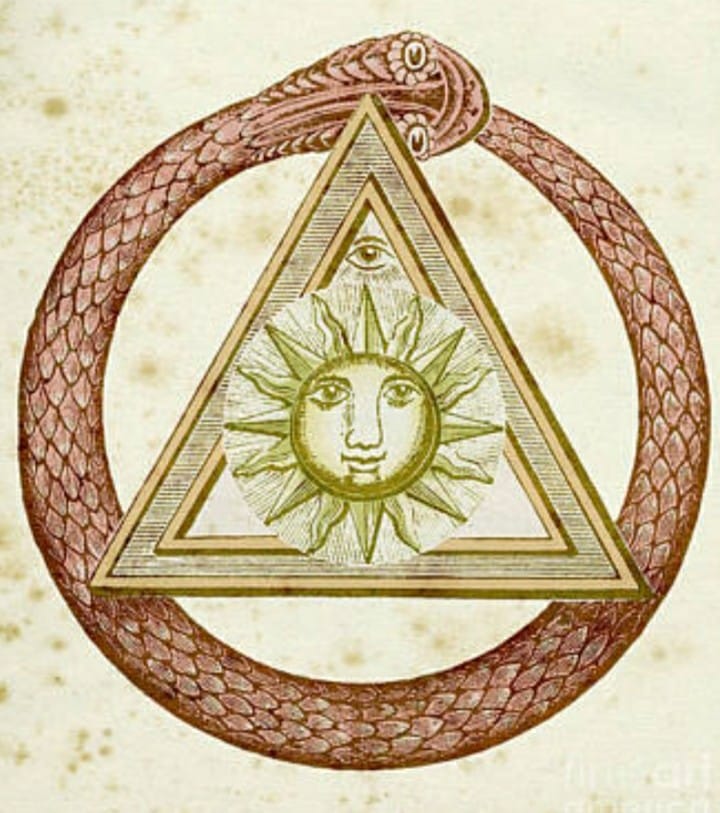
Amelia vomits out a thick, black fluid, her body writhing, her psyche convulsing. This is nigredo, the first stage of the alchemical opus. Nigredo represents decomposition and blackening, the confrontation with the psychic Shadow. In this stage, the ego must die to itself; the old identity must break apart to make room for rebirth.
Only after this catharsis can Amelia confront the Babadook, seeking to contain and relate to it rather than destroy it:
You’re trespassing in my house.
This marks a shift from possession to integration. The Shadow no longer rules. Amelia does.
Feeding the Shadow: Integration as Practice
In the film’s closing scenes, Amelia visits the basement, bringing a bowl of worms harvested from the garden. This is not an act of fear. It is ritual tending. She acknowledges the Shadow and honors its presence, keeping it fed so that it does not fester or erupt again.
Importantly, this is not a return to repression. Amelia now has a conscious relationship with the Shadow. She collects the worms while awake, in the garden, a space of healing and growth, and offers them to the unconscious. This symbolizes an ongoing act of attention: Shadow work is a lifelong devotion rather than a one-time battle.
The circuit between the garden and the basement, between the flowering, solar space of life and the dark, chthonic realm of the Shadow, forms a sacred loop. This is the completed alchemical opus: the transformation of death and decay into gold, into renewal.
“Maybe When You’re Older”: Wisdom and Protection
Samuel asks about the Babadook:
When can I see it?
Amelia responds:
Maybe when you’re older.
The work of confronting the Shadow is not yet his burden. For now, he is protected but curious. The answer acknowledges the initiatory nature of the Shadow. You must be ready. And he will be, in time.
Real Magic and Wholeness
In the final garden scene, Samuel performs a literal act of magic, transforming a coin into a dove. It is not sleight of hand. It is a moment of real magic, made possible only after the Shadow has been faced.
The dove, a symbol of peace and alchemical sublimation, emerges from the mundane. The transformation of the coin into the bird mirrors the soul’s transformation through the alchemical stages.
This is the final sign that something essential has shifted: when the soul is no longer divided, magic returns to the world.
Conclusion: The Sacred Work of Tending
The Babadook is not a story of exorcism or conquest. It is a story of initiation, death, and rebirth. Amelia does not destroy her Shadow. She feeds it. She builds a relationship with it. She keeps it from growing monstrous by giving it acknowledgment and care.
This is the path of integration. It is the way of the alchemist and the healer.
The work is never done.
But in the tending, we return to life, carrying love and magic, our eyes wide open.
comments powered by Disqus