The Adopted Child: Nurturing the Anima Within
A dream of adoption, childhood wounds, and the journey toward internal wholeness through nurturing the feminine within
- 6 min read
Last night I dreamed of adopting a daughter—a profoundly moving experience that has stayed with me throughout the day. The dream carried that numinous quality that signals genuine psychological significance, and exploring it through a Jungian lens reveals teachings about integration, wholeness, and the sacred work of tending what has been neglected within.
The Dream
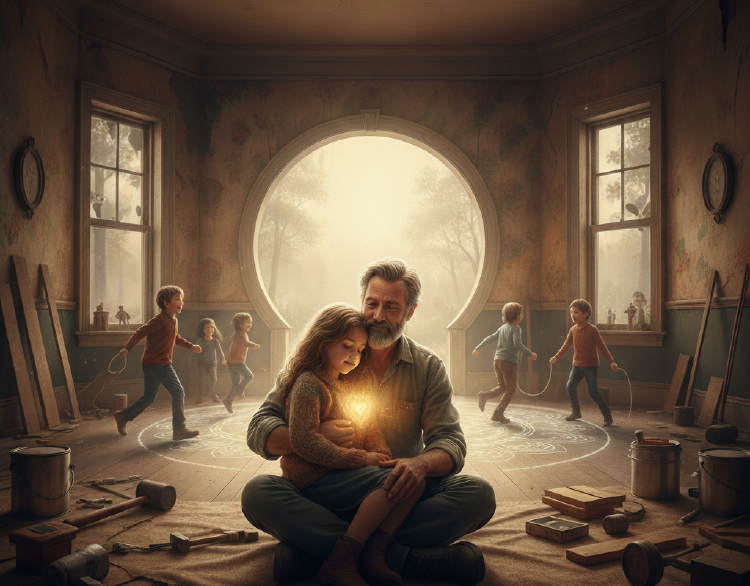
I adopted a girl. The setting was my childhood home, though it appeared run down and in need of repair—I was working to fix it. Several children were present, and we went out into the cul-de-sac to play together.
The girl I had adopted resembled the woman from an earlier dream—the ghost caretaker who helped me tend the spirits in a haunted house. As I held this child, I felt an overwhelming sense of completeness and fullness. Time passed in the dream, and she grew into adulthood while I continued to embrace her. I felt her warmth, her love. The connection was profound and entirely fulfilling, though not sexual in nature—it was something deeper, more fundamental.
The Psychological Landscape
The Childhood Home
Returning to my childhood home in dreams always signals a return to psychological origins—the place where foundational patterns were formed. That the house appeared run down speaks to damage and neglect that occurred in that formative space.
My work in the dream was repair—actively tending to the broken structure. This represents the ongoing work of addressing childhood wounds, rebuilding what was damaged, creating stability in the very foundation of the psyche.
The Adopted Girl as Anima
The girl I adopt is clearly an anima figure—Jung’s term for the inner feminine archetype that mediates between ego-consciousness and the deeper unconscious. Significantly, she resembles the woman from my ghost caretaker dream, confirming this is the same archetypal energy appearing in different developmental forms.
But here she appears as a child I choose to adopt and nurture, not as a romantic projection or external relationship. This represents a fundamentally different way of relating to the anima—through care, nurturing, and conscious choice to tend what has been neglected within.
The Circle of Play
The cul-de-sac where we play forms a mandala—a sacred circle, a protected space. In Jungian terms, the mandala represents wholeness and the Self. The presence of multiple children in this protected space suggests various aspects of the psyche being given attention and care, all allowed to play freely in safety.
Play itself is crucial—it represents engagement that is joyful, spontaneous, and free from utilitarian purpose. This is the psyche healing through genuine connection rather than forced work.
The Transformation Through Time
The dream’s most powerful element is the passage of time. The girl grows from child to adult while I hold and embrace her. This represents the development and maturation of my relationship with the anima—from initial contact (choosing to adopt) through nurturing care to mature integration (embracing her as an adult).
The key insight: I provide the love and care throughout this development. I am the one holding, nurturing, allowing her growth. This is internal work, not dependent on external relationship or validation.
The Feeling of Completeness
The dream’s emotional quality was profound. Holding this child, and later embracing her as an adult, created feelings of complete fulfillment. The warmth and love I experienced weren’t seeking anything beyond themselves—they simply were, whole and sufficient.
This completeness without sexual dimension points to something Jung emphasized: the coniunctio or sacred marriage can happen internally. When the masculine principle (ego-consciousness) properly relates to the feminine principle (anima) within the psyche, genuine wholeness emerges.
This isn’t self-sufficiency as isolation but integration as internal relationship. The difference is crucial.
The Ghost Caretaker Connection
In an earlier dream, a woman guided me through a haunted house, helping me tend the ghosts—unintegrated psychic content that needed acknowledgment and care. That same figure now appears as a child I adopt and nurture.
The progression is significant:
- Then: She was my guide, showing me the work that needed doing
- Now: I actively engage in caring for her, nurturing her growth
This shows the relationship with the anima maturing. Initially she guides us toward the work. Then we take responsibility for actively tending what she represents—the wounded, neglected feminine aspects within ourselves.
The Alchemical Dimension
In alchemical terms, this dream depicts the beginning of the opus—the Great Work. The damaged childhood home represents the prima materia, the raw material requiring transformation. The adoption represents conscious choice to engage with this material rather than avoiding it.
The growth from child to adult mirrors the alchemical stages—from nigredo (the damaged house, the neglected child) through careful tending toward albedo and rubedo—purification and the emergence of integrated wholeness.
The cul-de-sac as circular, protected space represents the vas hermeticum—the sealed vessel where transformation can safely occur.
What the Dream Teaches
Adoption as Conscious Choice
I didn’t find this child by accident—I adopted her. This represents the conscious choice to take responsibility for wounded, neglected aspects of ourselves. We choose to care for what has been abandoned within.
Nurturing as the Work
The work isn’t analytical understanding alone but actual nurturing care. Holding, embracing, providing warmth and love—these actions heal in ways that mere insight cannot.
Time and Development
The dream shows transformation as a process requiring time. The child doesn’t instantly become adult—she grows through sustained care and relationship. This reflects the reality of psychological work: genuine integration unfolds gradually through consistent attention.
Internal Wholeness
The profound fulfillment I experienced came from internal integration, not external relationship. This points toward what Jung called individuation—becoming whole through integrating previously unconscious or rejected aspects of ourselves.
The Contrast With Projection
This dream offers crucial teaching about the anima. Rather than projecting the inner feminine onto external women (seeking in others what can only be found within), the dream shows adoption and nurturing of the anima as internal work.
When we project the anima, we seek wholeness through romantic relationship or sexual connection. When we properly relate to the anima internally, we find wholeness through integration—and then can relate to others from that wholeness rather than desperate need.
The Repair Work
That I’m repairing my childhood home while nurturing this child shows the two aspects of healing work:
- Structural repair: Addressing the damage done in formative years
- Active nurturing: Caring for what was neglected or wounded
Both are necessary. We must repair the foundation while simultaneously nurturing what has been waiting for our attention and care.
Final Reflection
This dream arrived as a gift—a vision of what genuine internal integration looks like. Not the frantic self-sufficiency of trying to meet all needs alone, but the sacred work of adopting, nurturing, and allowing to mature the wounded feminine within.
The feeling of completeness, warmth, and love points toward what becomes possible through this work: a sense of wholeness that isn’t dependent on external validation or relationship, but emerges from conscious, caring relationship with the depths of our own being.
The damaged childhood home can be repaired. The neglected child can be adopted and nurtured. The sacred circle can hold multiple aspects of the psyche in protected play. And through sustained care and attention, what begins as wounded child can mature into integrated wholeness.
This is the work. This is the path. And the unconscious, in its wisdom, shows us not just what needs doing but what becomes possible when we do it with love, patience, and sustained commitment.
The anima waits—not as external projection but as internal potential calling us toward wholeness. The work is choosing to adopt her, nurture her, and allow her to grow into mature integration within the psyche.
And in that integration lies the completeness we’ve been seeking all along.
- Tags:
- dreams
- jung
- anima
- inner-child
- integration